
The RV Book Fair 2026: Interview with Heather Bridges


Heather, your background is incredibly diverse—from being a Montessori teacher and yoga instructor to becoming a producer and senior sound editor. How did your creative journey lead you into the world of audio storytelling?
I actually come from a family of creatives, everything from storytelling and writing to painting, sewing, theater, and music. We’re just a very creative family overall, so I always knew whatever I did was going to be in a creative field. Whether it was teaching children, doing yoga, or now with editing, creativity is really the thread that ties it all together. Audio editing just fit right into that path; it lets me take all those storytelling elements and just bring them to life.
You work very closely with your brother, Sean. Many siblings have very different personalities, yet you've built a successful creative company together. What has that experience been like, and what do you each bring to the partnership?
Sean and I have always been super close. We're very different and our creative styles are totally different, but we’ve just found a great rhythm for working together. What I really love is that Sean gives me free rein to bring the story to life through sound. Whether it's picking the music, building out the audio, or working with each actor and actress's voice, he gives me the space to experiment and just bring it all together. Having that kind of trust makes the whole process so much fun.
As Executive Producer and Supervising Sound Editor, which part of the production process excites you the most, and why?
For me, it’s definitely the recording and the sound editing. I love being in the room for the recording part meeting the actors, seeing them bring these characters to life, and capturing that energy. But then I get to bring all those pieces home, pull them into my software, and really start building the story. I start with their voices, and then layer by layer, I build under them adding the music and laying in those little details like a chair sliding out or footsteps in a room. That’s where it all comes together into this beautiful, complete story.
Audible Parade describes its productions as "movies for your mind." How do you transform a script into an immersive audio experience that allows listeners to visualize every scene?
The best part is that Sean creates these beautiful scripts, which makes my job so easy when we go from the recording to turning it into something fabulous. My part is to take what we record and bring Sean's story to life. Because when you watch TV, you can see what’s happening, but with audio, it’s all in your ears. You have to layer in those sound effects and music to build the atmosphere so people can picture the whole world just by listening. It really comes down to that.

You've worked on productions such as "Triple Six," "One for the Road," "Parasite Zero," and the audiobooks for "Gunbarrel Highway" and "On the Bayou." Is there one project that holds a special place in your heart?
I’d say my favorite production so far has definitely been One for the Road. It’s a Stephen King Dollar Baby project, which was just so exciting to work on. We had to create all these vampire and monster sounds, and I actually got my dad involved, too! It turned into this big family affair, with all of us doing Foley art together to bring those creatures to life. There was so much layering with the sound effects to really build up that thriller suspense and make it feel genuinely scary. It was just so much fun.
Sound editing is often invisible to the audience, yet it's one of the most important elements of storytelling. What are some of the subtle techniques you use to build emotion, tension, or atmosphere without listeners even realizing it?
Building the atmosphere for the listeners really comes down to how you layer the sound effects. Usually, I start by getting the audio editing done, and then I bring in the music based on where I want the tension to go in that chapter. From there, I start adding in all those little background sounds you might not normally think about—like if the characters are in a bar, adding the clinking of glasses or an overhead fan running. It’s all about creating layers. That way, even if you close your eyes, those sound effects let you visualize the scene and see the whole story clearly. That’s definitely the best part.
Audio storytelling is experiencing a remarkable resurgence. Why do you think audiences are once again embracing audio dramas, and what makes them different from traditional audiobooks?
Audio storytelling is different because of that layering effect. The sound effects create the atmosphere, so you can actually see the scene in your mind. With an audiobook, you're listening to the story, but it’s mostly just the narration—it’s more of a flat line. But with an audio drama, you get all those ups and downs, the ebbs and flows, the spikes, the suspense, and the comedy. An audiobook is just telling you a story, but what we're doing is creating the story.
Working behind the scenes often means solving unexpected problems. Can you share a memorable production challenge that turned into a valuable lesson or perhaps even a funny story?
Oh, absolutely. A memorable production challenge for me was on our very first project, back when I didn't have much audio editing experience. We were brand new and really didn't have a clear idea of what we were doing. I hate to say we were winging it, but we were kind of winging it! We had rented studio space at Los Senderos, and Larry, who was basically my mentor, accidentally set the microphones up backward. So when I sat down to edit, everyone sounded like they were speaking from inside a tin can or a tunnel! The biggest lesson I learned from that whole experience was to always double-check the mic setup especially if we're working with Larry. It was funny, it was a real learning experience, and it definitely taught me that checking your gear upfront makes all the difference.
Looking ahead, Audible Parade has exciting projects in development, including Parasite Zero Part Two and Sean's live-action film High Moon. What are you most excited about, and where do you see Audible Parade heading over the next few years?
It has been such an exciting time—these last few months this summer have been super busy! I’m currently working on Parasite Zero Part 2, and I did a little bit of backup editing with High Moon. I’m also working on Sean’s book, On the Bayou, which has been really fun. Looking ahead, I’m super excited for Sean’s next production that he’s writing right now, which we'll start in the new year. Over the next few years, I really see us building our own sound studio and getting even more of the family involved. My daughter is studying different production genres, and I have nieces and nephews who could jump in, too. I just want to keep creating, keep bringing these beautiful stories to life, and enjoy every bit of it.
Heather Bridges is the senior sound editor and executive producer for Audible Parade, managing the recording studio and working with a full cast creating audio books and productions.
She is the supervising sound editor on One for the Road and learned her trade as a sound editor on Triple Six. She produced and edited the unabridged audio books for Gunbarrel Highway and On the Bayou.
She worked and trained out of Los Senderos Studio in Blanco, Texas. And she lives on a ranch with her family and animal menagerie in the Texas Hill Country.
Find out more at https://audibleparade.com.

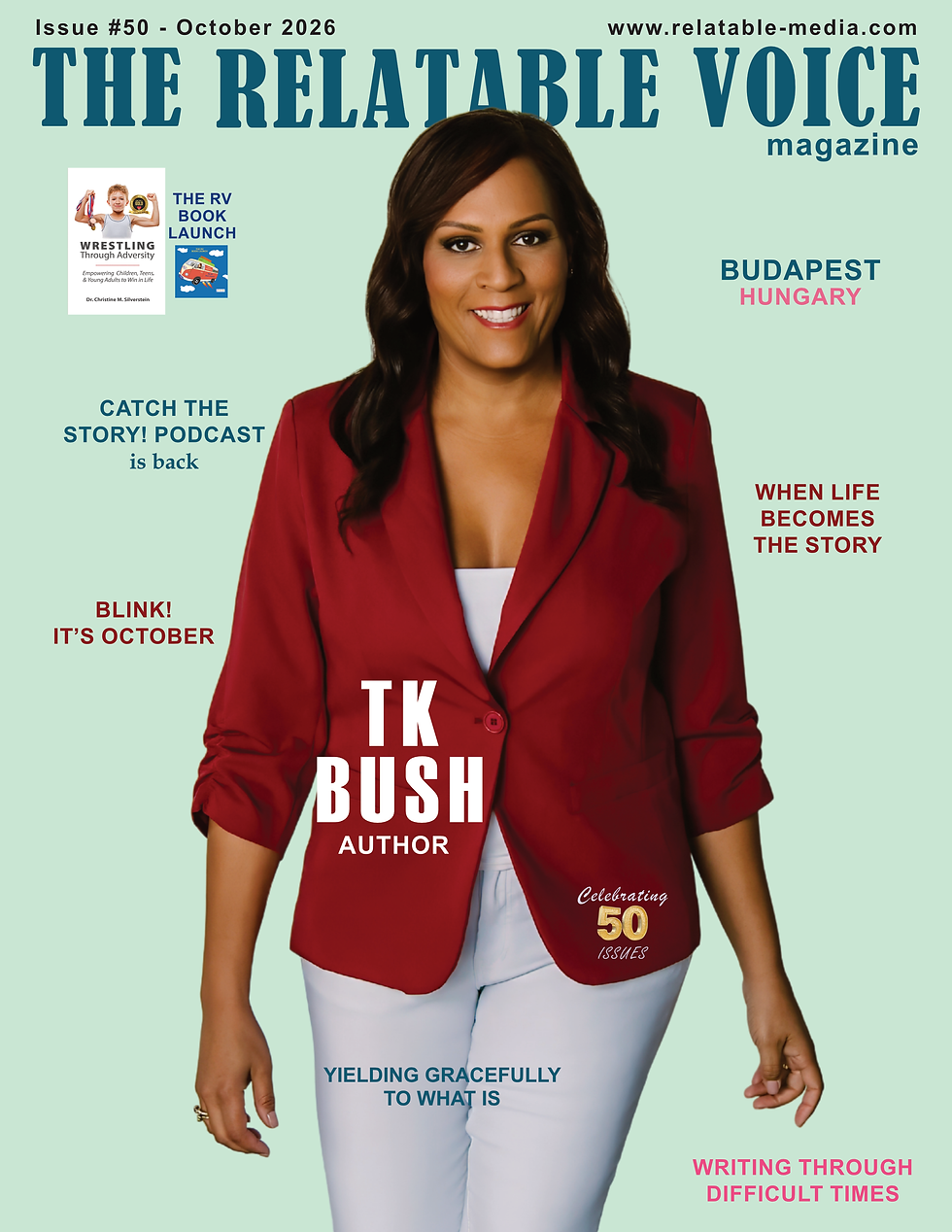
Interview published in The Relatable Voice Magazine - The RV Book Fair 2026 - Special. Download the full magazine for free at The RV Book Fair | Relatable Media.


Comments